The Philosophy of Nichiren: Buddhism in Kamakura Period – Mappo and Myo-Ho-Renge-Kyo 日蓮の哲学:鎌倉新仏教 – 末法と妙法蓮華経
- Issei Takehara
- Apr 24, 2012
- 21 min read

I: Introduction
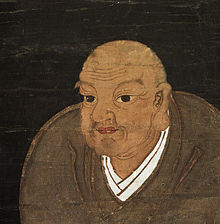
Nichiren (1222-1282) is known for his radical break with the state-sponsored religion, establishing himself as one of the founders of Kamakura New Buddhism. Although his strong faith in the Lotus Sutra derives its origin from the Mahayana school of Buddhism, officially introduced to Japan in 552 from China as T’ien-T’ai school, Nichiren as well as other monks saw strong objections against how the Buddhism was officially practiced in Japan. Due to the emperors’ monopolization of the right to officially ordain Buddhists, the monks so ordained were not freely able to preach to anyone they wished; their sole job as the official monks was to pray for the welfare of the nation and people collectively, and they were prohibited from performing the funerals or preaching to women and the sick (in particular, lepers) as these are impurities to be avoided. The monks who believed the Buddhist teaching of T’ien-T’ai (the Lotus Sutra) were reduced to nothing but mindless performers of bureaucratic rituals of prayers, thus, some ardent believers broke ties with the official monks, and became independent monks who then came to be known as reclusive monks. Freed from state restrictions, they were finally able to preach and practice Buddhism in accordance with their locus classicus, the Lotus Sutra, hence also giving rise to philosophical interpretations of the texts and debates over specific doctrines within the Mahayana tradition.
In this paper, my focus will be on one of such reclusive monks named Nichiren, who established his own school, Nichiren sect, by faithfully sticking to the authority of Shakyamuni (or, Gotama Buddha). I will in particular explore his major treatises, “On Establishing the Correct Teaching for the Peace of the Land” (1259) and “The Selection of the Time” (1275), where his philosophical views and reasons for the necessity for his doctrine of Myo-Ho-Renge-Kyo are expounded. In doing so, the mentions will be made on Mappo (the Latter Day of the Dharma) as well as on his Buddhist cosmic view, i.e. the principle of three thousand realms in a single moment of life (ichinen sanzen), in relation to Honen’s philosophy, which is what Nichiren was responding to, so we can take a better glance at some of his main arguments.
II: History and Philosophy of Nichiren’s Buddhism
Nichiren’s philosophy, however, is of necessity at the same time historical. This is because his fundamental beliefs in the supremacy of the Lotus Sutra come from the reflection of the time he lived in. He explains why he felt the need to write his philosophical treatise, On Establishing the Correct Teaching for the Peace of the Land, as a result of discovering the true reason for why there had been natural disasters epidemics constantly destroying the lives of people, even though the Buddhist teachings were everywhere practiced. Hence, it was in the enlightenment of achieving his own Buddhahood and disagreement with other ‘heretic’ teachings at the time that his philosophy developed. Such that it is first necessary to be acquainted with the gist of the prevalent teachings of the time which Nichiren so eagerly abhorred.
Honen (1133-1212) is said to have preached the following to a prostitute who suffered from guilt in doing what she did,
WOMAN: Because of the evil deed I did in my previous life, I am forced to have such a sinful occupation in my present life. Please tell me how I can redeem myself so I can get into nirvana in my next life.
HONEN: Stay as you are right now, pray ardently to Amida Buddha for salvation. Amida Buddha offers salvation specifically to people like you. Just keep praying, and stop worrying.
What Honen preached was a significant change in the Buddhist philosophy. Up until then, Buddhist teaching was strictly impersonal matter in Japan. Believers were only to follow the officially sanctioned rituals at the scheduled time and pray for the welfare of the state and never for the individual salvation. Further, the doctrine of reincarnation (samsara) was already determined according to the deeds done in the previous life, so there was nothing one could do to change it in the present life. However, Honen preached the possibility of individual salvation and even offered the way to change the course of samsara by fervently praying to Amida Buddha. In his major work Senchaku Hongan Nenbutsu Shu, Honen preached that anyone including evil-doers could attain Buddhahood and reborn in the Pure Land just so long as he has absolute faith in Amida Buddha and prays Namu-Amida-Butsu (nenbutsu) until his death. He did this as a result of combining two distinct practices into one, focusing on the easy practice of reciting nenbutsu alone. By combining the difficult and easy practices in the form of nenbutsu, he discarded the importance attached to the traditional performance of rituals, following strict scriptural orders as well as financially sponsoring temples as not essential for salvation. Further, his philosophy of nenbutsu attracted commoners who could not read or understand the Buddhist text, i.e. Mahayana texts, because according to Honen, all one has to do is to recite Namu-Amida-Butsu. Honen reasoned that the Scared Way teachings of Mahayana and Hinayana are difficult to practice, while the Pure Land teaching is easy to practice. Since it is not possible to actually follow all the teachings and live in this world at the same time, it is better to abandon the difficult way, and immediately embrace the easy to practice way instead of trying to do the impossible. In this way, Honen reduced “the doctrine to its very essence, to reliance upon a single act of faith” and nothing but “the utterance of a formula.”
This new movement and the subsequent popularity of nenbutsu in Kamakura period that the Pure Land teaching is the way for salvation necessarily excluded the primary Sacred Way teachings, i.e. Mahayana writings. For Nenbutsu Chosen Above All denied the supremacy of the Lotus Sutra, and instead put emphasis on one of Amida of the Land of Perfect Bliss, while forgetting all the other Buddhas. As a devout T’ien-T’ai Buddhist, Nichiren saw this movement as contradicting “the sacred teachings of the Buddha’s entire lifetime and [bringing] confusion to people in every direction.” Further, as he believed that the Lotus Sutra to be the very embodiment of Shakyamuni Buddha, the only way for the protection of the land as well as for the salvation of the people was to propagate the teachings of the Lotus Sutra. Consequently, Nichiren believed this common practice of nenbutsu as destructive to the nation as well as the representation of the Final Dharma age, as described in the Lotus Sutra. Nichiren agrees with Honen in that “our present age corresponds to the fifth five-hundred-year period described in the Great Collection Sutra, when ‘the pure Law will become obscured and lost’”, but he disagrees with Honen’s passive attitude towards the possibility of salvation that since we live in the Final Dharma age when everyone is confused and the true teaching lost, there is not much we can do about it except for praying to Amida Buddha for help. Contrast to Honen’s view of reliance on the Other-Power (tariki), i.e. Amida Buddha, for salvation, Nichiren does not discuss using the distinction of self-power and Other Power to achieve Buddhahood. Instead, he directs us to focus on the principle of three thousand realms in a single moment of life, which requires concentration and understanding of the Myo-Ho-Renge-Kyo. The fact that he is aversive to the idea of nenbutsu, the reliance on the Other-Power and the reason why Nichiren might have objection against such a practice should be obvious from the variety of Buddhist texts that speaks of there being no self nor others. According to this theory of No-Self (anatman), there is nothing permanent in empirical self, since everything is a stream of becoming that is dependent on everything else. Because there is no such a thing as a distinct ‘self’, and the self is nothing but an illusion arising from the false ideas about the world, it makes no sense in relying on the Other-Power, which does not strictly speaking exist. This original view of Buddhism is also manifest in Hongaku [the original enlightenment] thought inherent in T’ien-T’ai sect, which is nothing but the exposition of that very thought that everything in the world has a potential Buddhahood within, and that the difference between the Buddhasattva (the Absolute or Shakyamuni) and the dependent beings like us is just that “the former is eternally free from what is grasped by false discrimination,” and the latter is lacking in “the concept of the mutual possession of the Ten Worlds.” Hence, it is not surprising to see the similar thought in Nichiren’s principle of three thousand realms in a single moment of life, as he believed himself to be “the votary of the Lotus Sutra.”
III: Philosophy of Nichiren
Now, having briefly focused on Nichiren’s thoughts in the context of the emergence of the Kamakura New Buddhism, I shall now turn to the more detailed discussion of his principle of three thousand realms in a single moment of life as well as why he thinks he is right in holding this view. A first question that comes to my mind is what the difference between the traditional Hongaku thought and his principle of three thousand realms in s single moment of life is. Why did he have the need to create his own doctrine if it is the essentially the same as the old doctrine of Hongaku thought? Second, in what way did Nichiren’s approach to Buddhism differ from the others, e.g. Honen, and in what way was it similar? After treating with these issues, I will discuss what evidence he had in aggressively exporting his teaching as the one and only way for salvation.
Hongaku thought, or the original enlightenment, developed two main philosophical conclusions from the non-duality of the Mahayana text in that it advanced the theory to its limit, arguing that “[a]ll existents, being empty of independent self-nature, are seen as interpenetrating and mutually identified.” As the Mahayana text attests, this includes not only human beings but also ants and crickets, mountains and rivers, grasses and trees, have potential for enlightenment. What is added here, though, is that all beings are innately buddhas, hence are enlightened inherently. Hongaku thought developed the Mahanaya’s non-dual original enlightenment into the absolute affirmation of the phenomenal world, and subsequently established itself as the climax of Buddhism as philosophy. This addition necessarily “negates any ontological difference between the ordinary person and the Buddha, the mundane world and the Pure Land, self and other, and so forth,” making any conventional distinctions of the phenomenal world collapsed into an undifferentiated, homogeneous realm. Such, then, was the standard concept of Hongaku thought prevalent in Nichiren’s time. However, Honen came into the scene, and obfuscated this distinction by introducing his senju nenbutsu, since it relied solely on the power of Amida Buddha as the other, which goes against both the Mahayana thought and Hongaku thought. Having seen the popularity of the Honen’s philosophy, Nichiren needless to say found it to be scripturally objectionable. The reason for this popularity of nenbutsu in spite of its false doctrine, he thought, was because Hongaku thought was too difficult to grasp for ordinary people and it makes the attainment of buddhahood possible only in theory. Indeed, Hongaku thought long remained a mere theoretical, abstract statement that preaches “beings are inherently enlightened by nature (honrai jikaku)” and bore no practical purpose. Nichiren reasoned that Hongaku thought must have missed something essential in the texts of Mahayana, and having perused the Mahayana writings, finally found the jewel hidden in the Lotus Sutra the principle of three thousand realms in a single moment of life, which manifests itself in the form of Myo-Ho-Renge-Kyo. Nichiren knew that Hongaku thought was too theoretical, lacking in concrete practice, while Honen was nothing but an empty recitation of nenbutsu, without a correct view. Although Nichiren fundamentally disagreed with Honen, i.e. in choosing the hierarchically primary text within the Mahayana scriptures, he too believed that Hongaku thought was not only difficult to grasp but also meaningless to try, because it would be impossible for you to know if you have attained a buddhahood until you die even if you understood the teachings and followed them diligently. On the other hand, the Lotus Sutra promises that we can attain buddhahood in this life in this form. Therefore, Nichiren sought out in the Mahayana texts what was missing in the Hongaku thought, which led him to elaborate on the concept of honrai jikaku. As stated in the Hongaku thought, he was convinced that all beings are inherently enlightened, but he realized that this was only a part of the story. He hence distinguished two types of the concept of the original enlightenment, which he called the principle of three thousand realms in a single moment of life. The first is the principle of three thousand realms in principle (ri no ichinen sanzen), which is the theoretical understanding of the beings’ inherent buddhahood. However, this only serves as the potentiality for the attainment of the buddhahood, in the sense that it is potential for the next life. But Nichiren already saw this attainment of buddhahood in the next life problematic, and what is more, not convincing enough for people to believe in it. The second principle is thus needed to concrete the doctrine as convincing and realistic as possible. This is the principle of three thousand realms in actuality (ji no ichinen sanzen), that is to say, “the very act of recitation of the five-character title of the Lotus Sutra (Daimoku or Myo-Ho-Renge-Kyo妙法蓮華経). Further, like Honen, he made the simple recitation of Myo-Ho-Renge-Kyo sufficient for salvation. What is different from Honen’s nenbutsu, however, is that these five characters already within themselves contain the teachings of the Lotus Sutra. So, by simply reciting these supreme words, Nichiren’s version of recitation is already actually enlightened, i.e. contains the seed for flowering as well as the flower (inherent Buddha nature) and all you need is the sun (the recitation of Myo-Ho-Renge-Kyo), whereas Honen’s nenbutsu falls short in the distinction of ‘the concrete actuality of the devotion’ and “the concept of the mutual possession of the Ten World,” needed to achieve a buddhahood. Of course, he also prays to Amida Buddha, who is not the supreme authority in the sutra, which is a problem since he would be praying to the wrong Buddha whose power is not strong enough to save him anyway. As can be seen from this, the principle of three thousand realms in principle and in actuality are so closely interwoven that they are simultaneous, just like “lotus flowers, which turn as the sun does, though the lotus has no mind to direct it, or like the plantain that grows with the rumbling of thunder, though this plant has no ears to hear it.” The likening of the principle to plants is on purpose, for he curiously believes that one can attain buddhahood even without understanding what Myo-Ho-Renge-Kyo means, just as long as they recite these words. This is precisely because practice of recitation is not seen in instrumental, linear terms as a means leading to an end, but rather, it is seen as the expression, confirmation, and depending of a liberation or salvation that in some sense is already present. Hence, this rather ‘automatic’ simultaneity of practice and realization is not to be taken as a denial of the necessity of continued practice, but it should be taken as a re-conceiving of it, as a necessity for meaningful practice.
Having elucidated the supremacy of Myo-Ho-Renge-Kyo and its intimate connection with the principle of three thousand realms in

a single moment of life, Nichiren spends at length discussing about the possibility of salvation of women in the Lotus Sutra. As has been already mentioned in this paper, Nichiren has emphasized the uniquely universal view of humanity in this sutra in affirming that a woman, who would otherwise not be able to attain buddhahood, could indeed become a Buddha as she is. None of the other sutras besides the Lotus Sutra expounded by any of the Buddhas anywhere can help them. Nichiren further makes a notion that it is utterly a waste of time for women to follow other sutras, since even though many of them “intone the name of the Buddha Amida, sixty thousand or a hundred thousand times a day… because the women who do so are relying upon sutras that can never lead women to Buddhahood or to rebirth in the pure land, they are in effect merely counting other people’s riches.” In this way, Nichiren also dissuades women from following the nenbutsu.
IV: Concluding Remarks: What Evidence does Nichiren Have
for the Supremacy of the Lotus Sutra?
As has been stated in his The Selection of the Time, Nichiren is firmly convinced that he was born to complete the task Buddha himself had anticipated over two millennia before, for he says, “one should understand that I am in fact the votary of the Lotus Sutra,” “If in fact I am not the votary of the Lotus Sutra, then who will uphold the one vehicle, the teaching of the Lotus Sutra?” and that in the over seven hundred years since the introduction of Buddhism into Japan, “there has never been a single votary of the Lotus Sutra other than the Great Teacher Dengyo and I, Nichiren.” One might wonder what would give him such an overwhelming confidence if not sheer arrogance. Nichiren, however, does have a good reason to have believed what he believed himself to be, that is, he has scriptural evidence. These pieces of evidence can be abundantly found throughout his writings, but I will here focus particularly on two of his major writings, namely, On Establishing the Correct Teaching for the Peace of the Land, in which he lays out an outline of his general interpretation of the Lotus Sutra, and The Selection of the Time, where he elaborates further in detail why he believed he was the one who would restore the correct teaching of the Lotus Sutra, as opposed to anyone else at the time.
By the time he completed On Establishing the Correct Teaching for the Peace of Land in 1260, Japan had already been constantly hit by famine, epidemics and natural disasters. Nichiren describes the sorrowful events in his writing, “[i]n recent years, there have been unusual disturbances in the heavens, strange occurrences on earth, famine and pestilence, all affecting every corner of the empire and spreading throughout the land. Oxen and horses lie dead in the streets, and the bones of the stricken crowd the highway,” with over half the population wiped out, there was hardly anyone who did not grieve. Hence, his journey as a devout monk began so he could understand what really was happening. Having perused the Mahayana sutras, which he believed to be the correct teaching, he soon realized that he lived in the Mappo, i.e. the Final Dharma period. According to the Lotus Sutra, “[i]n that evil age [i.e. Mappo] there will be monks,” “Or there will be forest-dwelling monks,” and “Evil demons will take possession of others.” Nichiren summarizes the situation described in the sutra as follows: In the Mappo period, eminent monks are possessed by demons and everywhere they deceive people and the rulers, but a single wise man will appear. Though people slander him and attack him. This will not please Brahma and Shakra. As a result, there will follow disturbances in the heaven and on earth. If the rulers fail to notice these warnings, “then the Buddhas and the great bodhisattvas will order neighbouring countries to attack the evil rulers and evil priests of these countries.” Nichiren, noticing the unusual phenomena, soon made a prediction saying “[t]hese [disasters] are omens indicating that this country of ours will be destroyed by a foreign nation.” The rulers did not listen to him, and Nichiren was repeatedly exiled afterwards. But in 1274 and 1281, when the Mongolians invaded Japan in the midst of typhoons, Nichiren’s preaching began to attract attention, just as Nichiren predicted according to the Lotus Sutra that “they will put their faith in this single humble priest whom they earlier hated,” and “all bow their heads to the ground, press their palms together, and in one voice will chant Nam-myoho-renge-kyo.”
Even though he seemed to have been subjected to an exile and to continuous severe punishments, without any protections from the gods, or perhaps because of it, his conviction grew stronger. The Lotus Sutra in fact says that “[t]here will be many ignorant people who will curse and speak ill of us and will attack us with swords and staves, with rocks and tiles,” and also that “[a]gain and again we will be banished.” Thus, Nichiren had, indeed, scriptural basis for arguing that he was the votary of the Lotus Sutra since “[h]ad I not been exiled [to Sado] but remained in Kamakura, then I would surely have been killed in the fighting [during the insurrection of 1272]. This too… was surely due to the plan of Shakyamuni Buddha,” and also the scripture would not have fulfilled what it says. In the similar reasoning, he pointed out that where the sutra says “[a]gain and again we will be banished,” if he had not been banished multiple times, the sutra would not have made any sense. By arguing for the close ties with the sutra, his life experience supported the validity of the sutra and vice versa. His argument had already been strengthened by the government officials’ rebellion of Jokyu Disturbance in 1221, which was seen as one of the predictions Buddha had made.
As has have seen, Nichiren’s life was a constant struggle and reconciliation with the historical contingencies, which led his conviction of himself as the restorer of the correct teaching. These events shaped his philosophy as the faithful believer of the Lotus Sutra in Mahayana thought. Seeing that his fundamental view of the world was construed by the concept of Mappo, it is natural that his philosophy was largely, if not entirely, influenced by the history in which he lived. Consequently, one cannot see or understand his philosophy apart from his immediate surroundings.
Kamakura period began in 1185 and ended in 1333, where the warrior class came to rule under the first shogun Minamoto no Yoritomo. It was followed by a short reestablishment of imperial rule, which again was succeeded by the warrior class rule well into Edo period in the 19th century. In a sense, Kamakura New Buddhism was the religion appropriated by the period of conflicts.
Nichiren, The Selection of the Time, 1275. The traditional date for the introduction of Buddhism to China is said to be 67C.E.
Matsuo, Kenji, “What is Kamakura New Buddhism? Official Monks and Reclusive Monks” in Japanese Journal of Religious Studies, vol.24: ½ (Spring, 1997), 179-189. http://www.jstor.org/stable/30234157 (accessed Mar. 28, 2012).
Ibid. The word for reclusive in Japanese is “tonsei” which originally meant ‘to withdraw from the secular world and enter the priesthood.’ But by the middle ages, it came to mean ‘monks who withdrew from the officially recognized temples.’ Also this is why monks today wear black surplice, which was distinguished from the official monks’ colour of the surplice, i.e. white, which signified purity by staying away from women and lepers. The intent of the reclusive monks was clearly to help and save anyone, including those who were thought to be impure and defiled.
Nichiren, On the Rationale for Writing “On Establishing the Correct Teachings for the Peace of Land”, 1268. “I, Nichiren, observing this state of affairs, proceeded to consult the great collection of Buddhist scriptures. There I discovered the reason why these prayers are without effect and on the contrary actually make the situation worse… In the end I had no other recourse than to compile a work to present my findings, entitling it On Establishing the Correct Teaching for the Peace of the Land.”
Honen in Honen Shonin Gyojo-ezu, quoted in Hiroo Sato, Gaisetsu Nihon Shisoshi [The Outline of History of Japanese Philosophy], (Japan, Minerva Publishing: 2011), 97. Translation mine.
Jacqueline I. Stone, “Placing Nichiren in the ‘Big Picture’: Some Ongoing Issues in Scholarship” in Japanese Journal of Religious Studies, vol. 26: ¾, Revisiting Nichiren (Fall, 1999), 383-421. http://www.jstor.org/stable/30233632 accessed on March 23, 2012.
That is, “Nenbustu Chosen Above All” (1198)
Literally, ‘the devotion to Amida Buddha.’
Shosetsu Nihonshi [Detailed Explanation of Japanese History], ed. Susumu Ishii, Fumihiko Gomi, Seishou Sasayama and 11 others (Japan, Yamakawa Publishing: 2007), 105. *this is the official and standard textbook used for Japanese History in high schools in Japan. Translation mine.
One is a difficult practice (nan-gyou), which is to become aware of the innate Buddhahood in each and everyone, while another is an easy practice (i-gyou), which requires one to simply recite the name of Amida Buddha in devotion, i.e. nenbutsu.
Hiroo Sato, Gaisetsu Nihon Shisoshi, 99. Translation mine.
Goerge Sansom, A History of Japan to 1334 (USA: Stanford University Press, 1958), 425-426.
i.e. the Lotus Sutra and Nehan gyo in particular. See William E. Deal, Nichiren’s Rissho ankoku ron and Canon Formation, in Japanese Journal of Religious Studies vol. 26: ¾ , Revisiting Nichiren (Fall, 1999), 325-348.
For example, Ruben L.F. Habito explains that Nichiren discovered on the basis of his reading of the Lotus Sutra that Amida Buddha was only one of the many emanations of the eternal Shakyamuni. See Habito, “Bodily Reading of the Lotus Sutra” in Japanese Journal of Religious Studies vol. 26: ¾, Revisiting Nichiren (Fall, 1999), 281-306. Accessed on March 28, 2011.
Ibid.
Nichiren, The Selection of Time, 1275. He quotes Shakyamuni Buddha in saying that “the first five hundred years after [my] passing will be the age of attaining liberation, and the next five hundred years, the age of meditation. The next five hundred years will be the age of reading, reciting, and listening, and the next five hundred years, the age of building temples and stupas. In the next five hundred years, ‘quarrels and disputes will arise among the adherents to my teaching, and the pure Law will become obscured and lost.’”
Ibid.
Sarvepalli Radhakrishnan and Charles A. Moore, Buddhism in A Source Book in Indian Philosophy (USA: Princeton University Press, 1957), 272-346. Also Mahayana texts are clear on that “our ideation gives rise to the false ideas of the ego and dharma,” and things falsely discriminated have no self nature whatsoever. Also Mahayana text says that “the Absolute and the dependent are neither the same nor different.”
Ibid.
Ibid.
Nichiren, The Opening of the Eyes (1), 1272. The Ten Worlds are the worlds into which persons with certain karma would be reborn.
Nichiren, The Selection of the Time, 1275.
Nichiren explains in his Object of Devotion for Observing the Mind Established in the Fifth Five-Hundred-Year Period after the Thus Come One’s Passing (1273), that “Life at each moment is endowed with the Ten Worlds. At the same time, each of the Ten Worlds is endowed with all Ten Worlds, so that an entity of life actually possesses one hundred worlds. Each of these worlds in turn possesses thirty realms, which means that in the one hundred worlds there are three thousand realms. The three thousand realms of existence are all possessed by life in a single moment.”
Jacqueline Stone, Medieval Tendai Hongaku Thought and the New Kamakura Buddhism: A Reconsideration, in Japanese Journal of Religious Stuides, vol. 22:1/2 (Spring, 1995), 17-48.
Ibid.
Ibid.
Literally, nenbutsu alone. The practice introduced by Honen and subsequently by Nichiren has been suggested by some historians that it bears analogical resemblance to the movement taken up by Martin Luther and others in the West in that this new Buddhism focused on the individual salvation as opposed to the salvation of the state as collectivity, and Nichiren especially made it his calling to preach the Lotus Sutra universally and equally, both men and women, which was unprecedented at the time. See Sansom, A History of Japan to 1334, as well as
Stone, Hongaku Thought.
Nichiren’s Kanjin Honzon Sho, paraphrased in Nichiren Shonin’s View of Humanity: The Final Dharma Age and the Three Thousand Realms in One Thought-Moment, in Japanese Journal of Religious Studies, vol. 26: ¾, Revisiting Nichiren (Fall, 1999), 239-259. http://www.jstor.org/stable/30233626 accessed on March 28th, 2012.
For instance, Nichiren repeatedly makes a mention of Honen, criticizing him for “[lumping] together all the 637 Mahayana scriptures in 2,883 volumes and along with them all the Buddhas and bodhisattvas and the deities of this world, and urged people to ‘discard, close, ignore, and abandon’ them, with these four injunctions corrupting the hearts of all people.” See his On Establishing the Correct Teaching for the Peace of the Land.
Nichiren, The Daimoku of the Lotus Sutra, 1265. Quoting Saicho [a.k.a. Dengyo], the founder of T’ien-T’ai school in Japan, “Neither teacher nor disciple need undergo countless kalpas of austere practice in order to attain Buddhahood. Through the power of the Lotus Sutra of the Wonderful Law they can do so in their present form.” Note: although Nichiren criticizes the common practice of the official monks in Hongaku though-based Buddhism in the 13th century, he saw Saicho as the only one, other than Nichiren himself, who truly understood the Lotus Sutra and was a votary of the sutra.
Stone, Hongaku Thought. See also Stone, Placing Nichiren, as well as Habito, Bodily Reading of the Lotus Sutra.
Habito, Bodily Reading of the Lotus Sutra. See also Stone, Placing Nichiren, where she quotes Nichiren saying that this concrete level of principle of three thousand realms in actuality is “found only in the origin teaching [Hongaku thought], hidden in the depths of the ‘Fathoming the Lifespan’ chapter.”
Nichiren, Daimoku.
Ibid.
Nichiren, The Opening of the Eyes (I), “[t]he doctrine of three thousands realms in a single moment of life begins with the concept of the mutual possession of the Ten World.” The Ten World are (from the higher spiritual worlds to the lower ones): Boddhahood, Bodhisattva, Realization, Learning, Heaven, Humanity, Arrogance, Animality, Hunger and Hell. Nichiren also explains, “each of the Ten Worlds is endowed with all Ten Worlds, so that an entity of life actually possesses hundred worlds. See also my footnote 26 above.
This is also a theme of Nichiren’s criticism against Honen’s nenbutsu, for all the Mahayana sutras, other than the Lotus Sutra, do not promise all beings salvation. Women are repeatedly excluded from the equation that at one point they even seem to suggest that “women can attain Buddhahood or be reborn in the Pure Land [only after] they have been reborn as men.” See Mori Ichiu, Nichiren’s View of Women, in Japanese Journal of Religious Studies, vol. 30: 3/4, Feminism and Religion in Contemporary Japan (Fall, 2003), 279-290. See the full quote by Nichiren in The Opening of the Eyes, “[i]n various Hinayana sutras that were preached before the Lotus Sutra, the possibility of women attaining Buddhahood is denied. In other Mahayana sutras apart from the Lotus Sutra, it seems that women can attain Buddhahood or be reborn in the Pure Land. Yet they may only do so after they have been reborn as men.”
Nichiren quotes a passage from Nirvana Sutra in his Daimoku.
Nichiren, Daimoku. He also uses analogies in every life how this is not at all strange, for he says, “if you so much as hear the words ‘pickled plum,’ your mouth will begin to water. Even in everyday life there are such wonders, so how much greater are the wonders of the Lotus Sutra!” and also that “even those who lack understanding, so long as they chant Nam-myoho-renge-kyo, can avoid the evil paths.” In other words, the simultaneity of the cause and effect becomes like a second nature to us.
Stone, Placing Nichiren.
Ibid.
Nichiren, Daimoku.
Ibid.
i.e. Saicho.
Nichiren, The Selection of the Time.
Nichiren enumerates the disasters happened during the Final Dharma period, i.e. the last five-hundred-year period. See my footnote 17. In 1257, “there occurred an earthquake of unprecedented magnitude.” In 1258, there was a great wind [perhaps typhoon?]. In 1259, a major famine, epidemics occurred, and “the epidemics continued to rage without abating. By this time, more than half the people of the nation had been laid low by death.”
Nichiren, On Establishing the Correct Teaching.
Nichiren, The Selection of the Time.
Nichiren, The Rationale for Writing “On Establishing the Correct Teaching for the Peace of the Land.
Nichiren, The Selection of the Time.
Nichiren, The Opening of the Eyes (I).
Nichiren quoted in Shijo Kingo-dono Gohenji in Asai, Nichiren’s View of Humanity.
Nichiren, The Opening of the Eyes (I).


Comments